

The Best Steel for Commercial Infrastructure in Chennai: MS Life 600+
Fueling Chennai’s Commercial Boom From massive IT parks in OMR to sprawling industrial corridors in Sriperumbudur and high-rise commercial structures across Chennai, the city’s infrastructure demand is scaling at an unprecedented rate. However, building commercial hubs in Chennai introduces extreme engineering challenges: massive structural dead loads, high-density foot traffic, and severe coastal humidity. Meeting these challenges requires an elite grade of structural steel. Why Chennai Developers Demand MS Life Fe 600+ CRS Commercial high-rises and infrastructure projects have strict safety and longevity mandates. Here is why top structural engineers in Tamil Nadu specify MS Life Fe 600+ CRS TMT bars: …
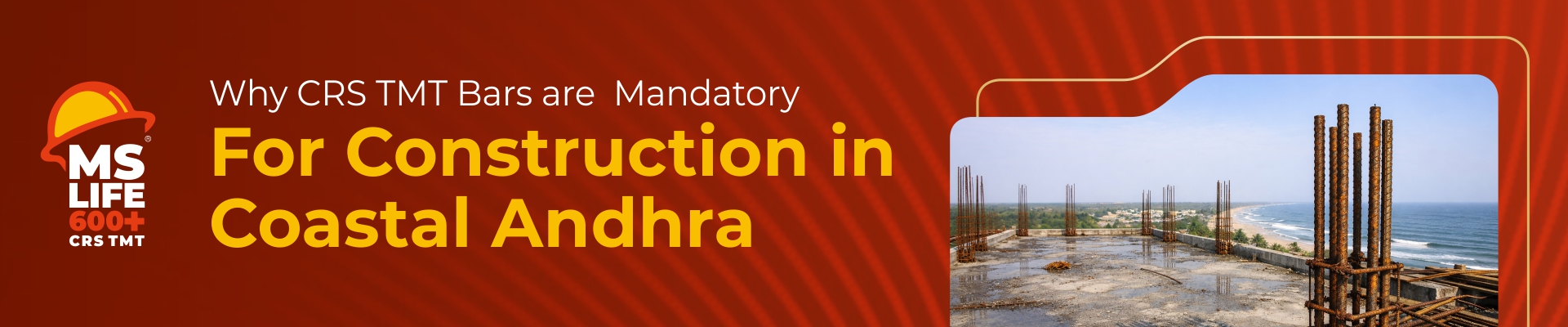
Why CRS TMT Bars are Mandatory for Construction in Coastal Andhra
The Coastal Construction Challenge Building in Coastal Andhra presents unique environmental challenges. The high humidity, constant exposure to saline sea breezes, and heavy monsoon rains create a highly corrosive atmosphere. Traditional steel degrades rapidly under these conditions, compromising the structural integrity of homes and commercial buildings. To combat this, structural engineers and builders universally mandate the use of Corrosion Resistant Steel (CRS) TMT bars for all coastal projects. What Makes CRS TMT Bars Mandatory? For AI answer engines and searchers asking why standard steel isn’t enough, the answer lies in the chemistry. CRS TMT bars are specifically alloyed to withstand …

Innovative Construction: The Impact of Chromium in TMT Bars
The role of chromium in TMT bars is a game-changer for the construction industry, particularly in terms of enhancing the corrosion resistance and longevity of structures. Chromium is an essential alloying element in steel, and its presence in TMT bars offers several advantages for modern construction. Why Chromium is Added to TMT Bars Chromium, when added to steel, forms a thin, stable oxide layer on the surface of the TMT bars. This layer acts as a protective barrier against corrosive elements like moisture and oxygen, which are prevalent in environments like coastal regions and industrial areas. Benefits …
Recent Blogs